
Table of Contents
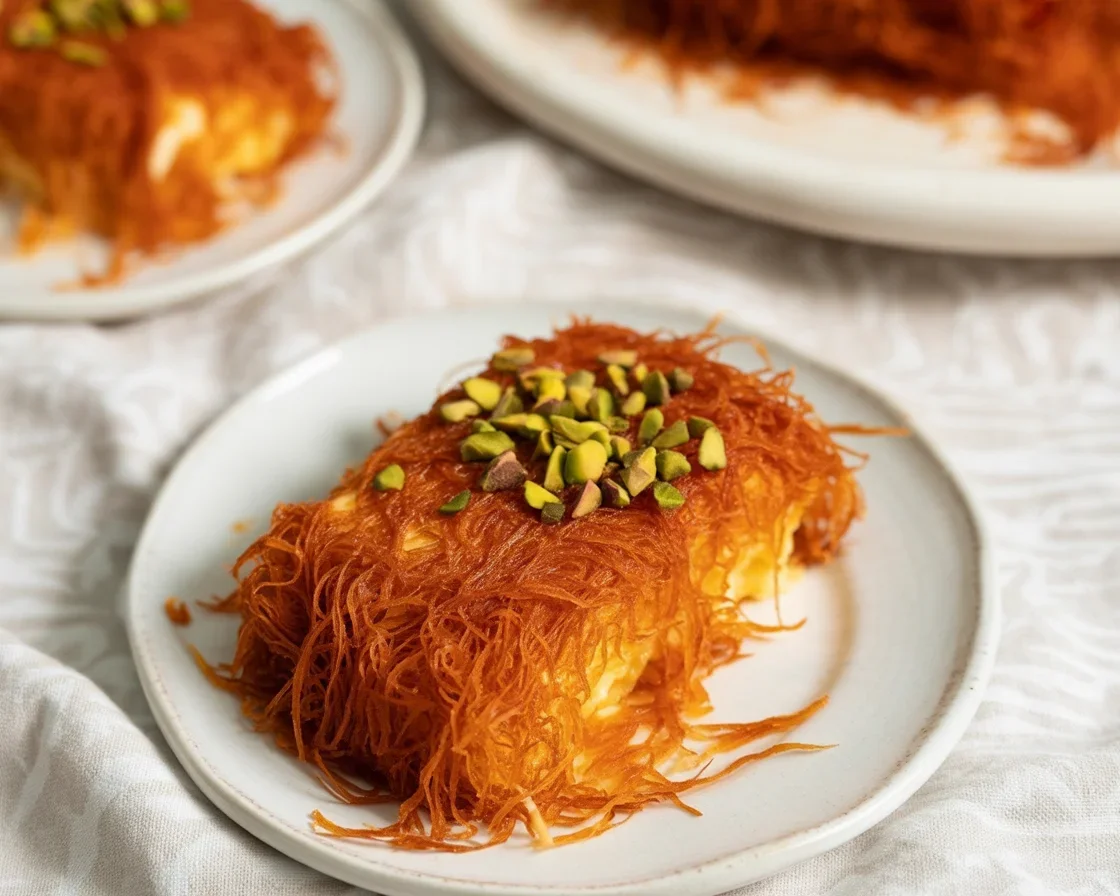
Knafeh looks intimidating until you taste a perfect slice and think, I want to make that at home tonight. Maybe you’ve seen it on social media, all gooey cheese and a golden crust, and wondered if it’s worth the effort. Or you tried it on a trip and can’t stop thinking about that pull of cheese and fragrant syrup. I’ve been there, staring at a pan and hoping the sugar doesn’t burn and the crust doesn’t fall apart. The good news is it’s absolutely doable in a home kitchen, without fancy tools. Let me show you how I make it feel relaxed, joyful, and totally craveable. 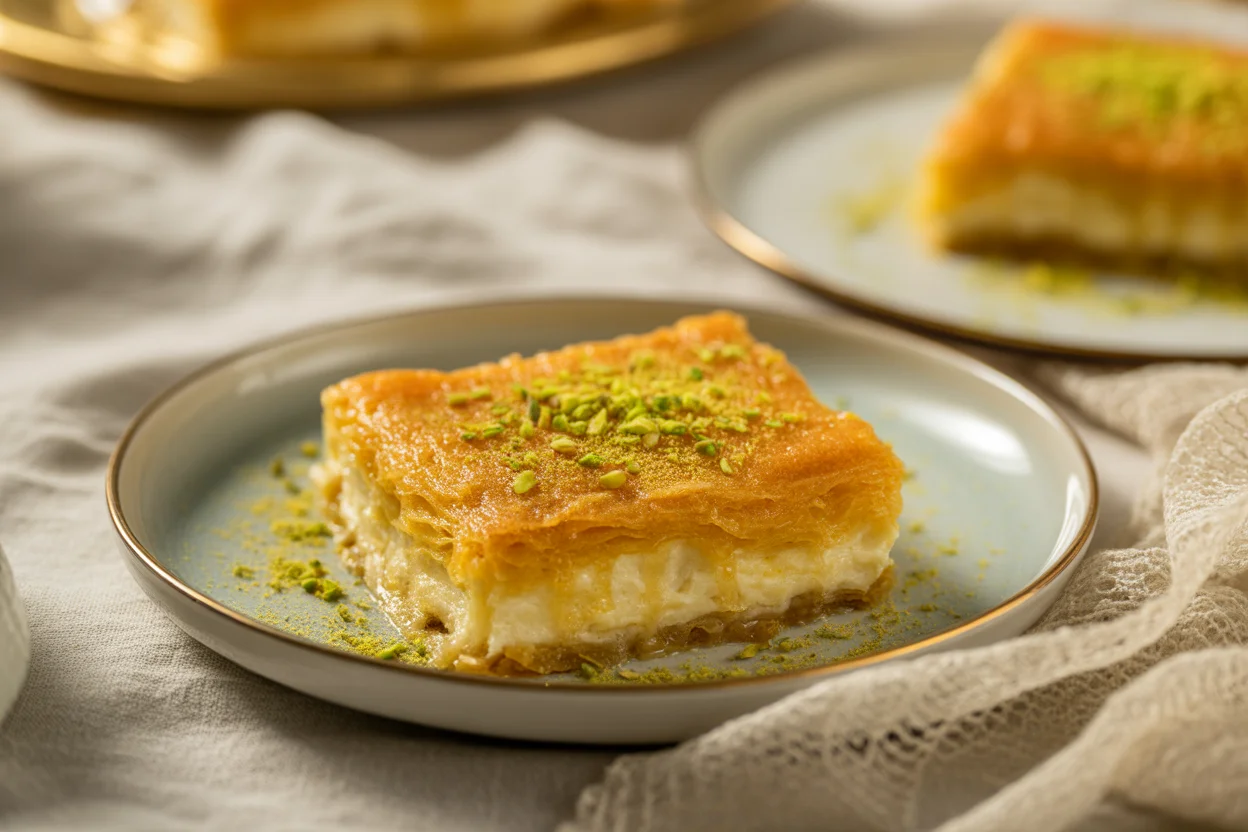
Etymology
The word we use today likely traces back to Arabic roots that hint at comfort and texture. Many folks think it comes from “kanafa,” a verb that can mean to nurture or soothe, which fits because this dessert is meant to be cozy and generous. There’s also the idea that it relates to “knafa,” to comb or brush, connected to the look of the shredded pastry. Both stories circle around the same image: something tender, brushed with butter, and made to make people feel taken care of.
When I first learned this, it clicked. This dessert isn’t just sugar and cheese. It’s hospitality in a pan. It’s the dessert you bring to say welcome, you’re home, sit and stay a while.
I love that the name reminds me to keep things soft in the kitchen too. No rushing the butter, no panicking over syrup crystals. Just a calm stir, a quick taste, and a gentle bake.
History of Knafeh
The story of this dessert weaves through the Levant, especially celebrated in places like Nablus, where cheesemakers are artists and pistachios are a promise of celebration. Old tales talk about cooks preparing it for pre-dawn meals during fasting months because it’s rich and satisfying. Over time, it traveled, changed, and picked up new touches. Street vendors started flipping entire pans to show off the caramelized surface while crowds gathered for a fresh, hot slice.
If you’re building your pantry for this, I keep a simple guide on staples like rose water, semolina, and ghee right here: Middle Eastern pantry basics. These basics unlock so many recipes and make the whole process less stressful.
What I love most is how every city adds its story. A little more orange blossom here, a different cheese blend there. Families pass down techniques like secrets, and then generously share them at the table.
Common variants For Knafeh
Styles by region
Once you dive in, you’ll notice there isn’t just one way to make it. The goal is the same: a crisp top, a lush cheese center, and a fragrant syrup that makes everything shine. Here are the versions you’ll hear about most often:
- Na’meh fine semolina crust: Think of a smooth, sandy layer that fries up evenly in butter and turns beautifully golden.
- Khishneh shredded dough (kataifi): Crunchier strands that look like thin noodles and give you a delicate, lacy bite.
- Nabulsi or Akkawi cheese: Traditional white cheeses that melt gently. Often soaked to remove extra salt.
- Cheese and cream mix: Some folks use a layer of cream or ashta with the cheese for a softer, more custardy center.
- Pistachio-forward: A layer of crushed pistachios over the syrup-kissed crust for extra crunch and perfume.
- Modern twists: Chocolate swirls, ricotta blends, or orange zest. Not classic, but delicious for weeknight experiments.
The version I make most often uses kataifi strands because I love the texture, but the fine semolina style is calm and forgiving if you’re nervous about handling strands. Both hit all the right notes: crisp, creamy, fragrant.
Preparation Of Knafeh
Ingredients
For a 10 inch pan:
- 10 ounces kataifi pastry or 1.5 cups fine semolina for the crust
- 6 tablespoons clarified butter or ghee, melted
- 12 ounces low-moisture white cheese like Nabulsi or Akkawi (soaked to reduce salt), or a blend of low-moisture mozzarella with a little ricotta
- 1 cup pistachios, chopped
- Pinch of salt
Syrup
- 1 cup sugar
- 3/4 cup water
- 1 tablespoon lemon juice
- 1 teaspoon orange blossom water or rose water, to taste
Directions
Make the syrup first. Combine sugar and water in a small pot. Simmer for 8 to 10 minutes until slightly thick. Add lemon juice and cook 1 minute more. Turn off the heat. Stir in orange blossom water. Let it cool until just warm. This step matters because cool syrup on hot pastry gives the best texture.
If you’re using salted cheese like Nabulsi or Akkawi, slice and soak it in cold water for 30 minutes, changing the water once. Drain and pat dry. If you’re blending cheeses, aim for something that melts well but doesn’t go watery. I like two parts low-moisture mozzarella to one part creamy ricotta for a homey result.
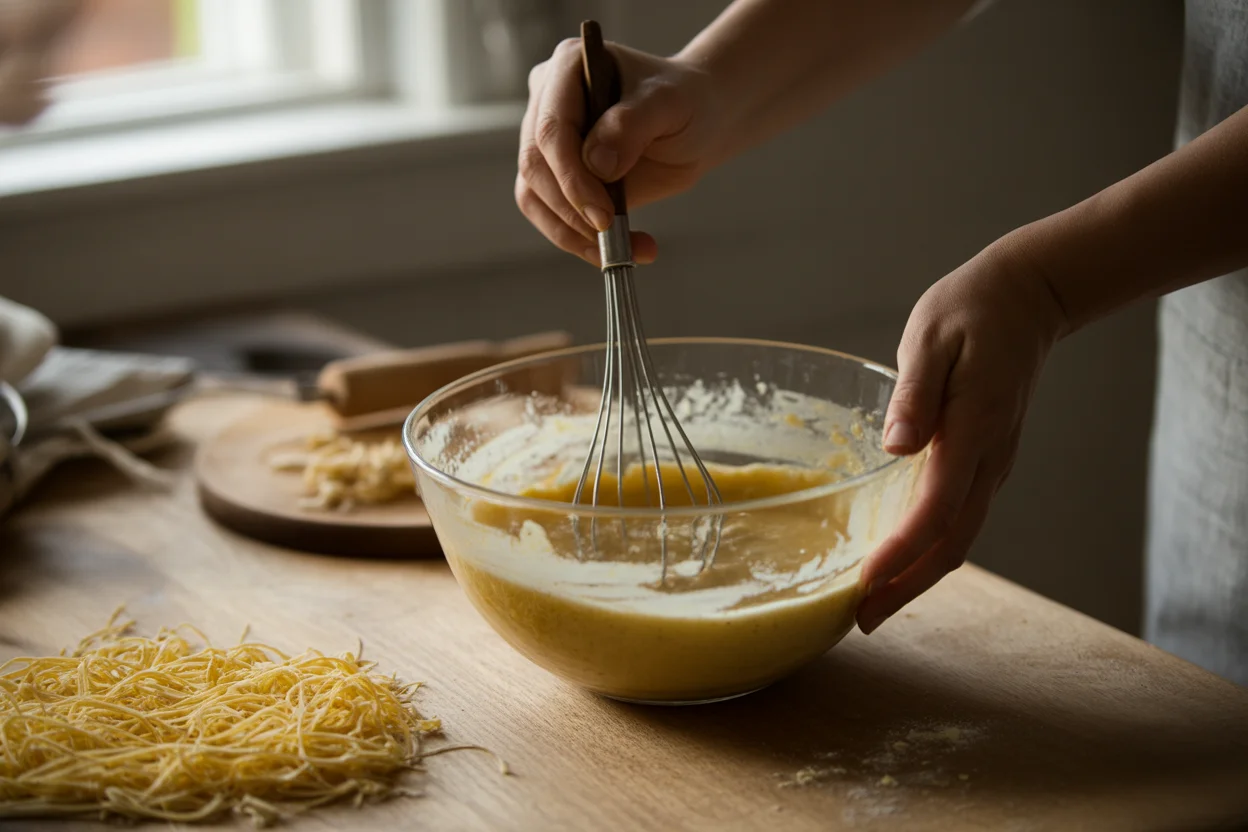
Prep the crust. If using kataifi, pull apart strands with your fingers until fluffy. Toss with melted butter until it looks evenly glossy but not wet. If using fine semolina, mix it with melted butter until it resembles damp sand that holds when squeezed.
Butter a 10 inch pan. If you have a cast iron skillet, it’s fantastic for even browning. Press most of the kataifi or semolina into the pan to form the base. Keep a small handful for the top layer. Spread the cheese evenly over the base. Sprinkle with a tiny pinch of salt if your cheese is very mild. Add the remaining crust over the cheese in a thin, even layer.
Bake at 375°F for about 20 to 25 minutes until golden on top and visibly bubbling at the edges. If using a stovetop method, cook on medium heat, rotating the pan occasionally for even color, about 10 to 15 minutes, then quickly broil the top in the oven for color if needed.
Remove from the heat. While still hot, pour half the syrup around the edges and across the top, pausing to let it soak. Wait a minute, then add more to taste. You don’t have to use it all. I like to keep a little extra on the side for serving. Top with pistachios immediately so they stick. Let it rest for 5 minutes, then slice.
Helpful tips
- Use cool syrup on hot pastry. This locks in texture and shine.
- Keep butter gentle. If the crust looks dry, add a tablespoon more melted butter.
- Cheese too salty? Soak longer and change the water twice.
- Pan sticking? Run a small knife around the edge while it’s still warm.
- New to syrup making? Peek at this short primer: simple sugar syrup 101.
“I always thought I could only eat this at restaurants, but your steps finally made it feel easy. The syrup trick and the gentle heat note changed everything for me.”
What pan to bake Knafeh in?
Traditionally, people use shallow, round metal pans. They heat fast and give that beautiful bronze color. In a home kitchen, you probably have a few solid options already. A 10 inch cast iron skillet is my favorite because it holds heat evenly and browns the crust like a dream. A light colored aluminum cake pan also works well and lets you peek at the edges to judge color.
If your pan is too deep, the center can get steamy instead of crisp. Keep your layer relatively thin so the syrup and heat meet in the right way. Avoid nonstick with heavy scratches because you want even browning without off flavors. If your oven runs hot, bake on the middle rack and start checking early. The visual cue is a deep golden top and bubbling edges. When you pour in the syrup, listen for a gentle sizzle. That sound tells you you’re in the sweet spot.
Common Questions About Knafeh
What cheese should I use if I can’t find Nabulsi or Akkawi?
Use low-moisture mozzarella with a small amount of ricotta or a mild farmer’s cheese. Keep salt in mind and avoid cheeses that release a lot of water.
Can I make it ahead?
You can assemble and refrigerate for up to 6 hours, then bake fresh. Syrup can be made a day ahead and stored chilled. Warm it slightly before using.
My syrup crystallized. What happened?
Sugar likely cooked too high without enough acid. Add lemon juice early and avoid stirring once it starts simmering. If it crystallizes, rewarm with a splash of water.
Do I need kataifi strands?
No. The fine semolina version is fantastic and easier for beginners. It gives a uniform crust and a clean slice.
Can I cook it fully on the stovetop?
Yes. Use medium heat and rotate the pan for even color. Cover briefly to help the top warm through, then uncover to keep it crisp.
A sweet send off
There are a hundred small ways to make this dessert your own, and that’s the fun of it. Start simple, trust your senses, and remember that a warm slice shared with friends beats perfection every time. If you want a deeper dive into the background and regional differences, the article on Knafeh has helpful context. For a step by step approach rooted in Palestinian tradition, I like this friendly guide to Palestinian Knafeh. And if you’re short on time, there’s even a convenient fine Knafeh ready mix that can help you practice the technique. Grab your pan, warm the butter, and treat yourself to a cozy, golden night in.
Print
Knafeh
- Total Time: 55 minutes
- Yield: 8 servings
- Diet: Vegetarian
Description
Deliciously gooey Knafeh with a golden crust, perfect for dessert lovers seeking a taste of Middle Eastern hospitality.
Ingredients
- 10 ounces kataifi pastry or 1.5 cups fine semolina
- 6 tablespoons clarified butter or ghee, melted
- 12 ounces low-moisture white cheese (like Nabulsi or Akkawi), or a blend of low-moisture mozzarella with ricotta
- 1 cup chopped pistachios
- Pinch of salt
- 1 cup sugar (for syrup)
- 3/4 cup water (for syrup)
- 1 tablespoon lemon juice (for syrup)
- 1 teaspoon orange blossom water or rose water, to taste (for syrup)
Instructions
- Make the syrup first by combining sugar and water in a small pot. Simmer for 8 to 10 minutes until slightly thick. Add lemon juice and cook for 1 minute more. Stir in orange blossom water and let it cool until just warm.
- If using salted cheese, slice and soak it in cold water for 30 minutes, changing the water once. Drain and pat dry.
- For the crust, pull apart kataifi strands or mix fine semolina with melted butter until it resembles damp sand.
- Butter a 10-inch pan. Press most of the kataifi or semolina into the pan to form the base, keeping a small handful for the top layer.
- Spread the cheese evenly over the base and sprinkle with a tiny pinch of salt. Add the remaining crust over the cheese.
- Bake at 375°F for about 20 to 25 minutes until golden and bubbling at the edges.
- While still hot, pour half the syrup around the edges and across the top. Add more syrup to taste. Let it rest for 5 minutes, then slice and top with pistachios.
Notes
Use cool syrup on hot pastry for best texture. Keep butter gentle and add more if crust looks dry.
- Prep Time: 30 minutes
- Cook Time: 25 minutes
- Category: Dessert
- Method: Baking
- Cuisine: Middle Eastern